Monday, November 28, 2011

tesla motors

##title##
Tesla Motors is named after electrical engineer and physicist Nikola Tesla. The Tesla Roadster uses an AC motor descended directly from Tesla's original 1882 design.


Tesla Motors screenshot


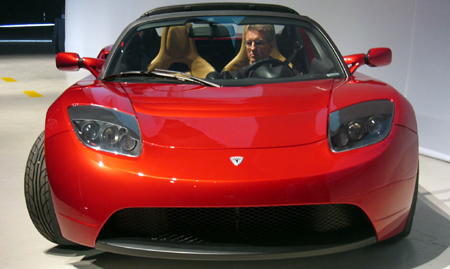
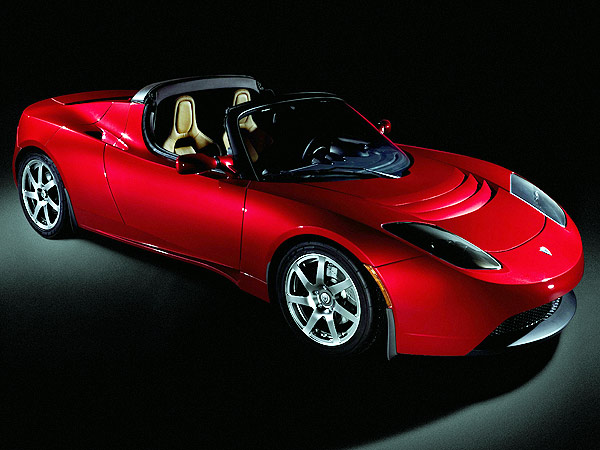
The Tesla Roadster, the company's first vehicle, is the first production automobile to use lithium-ion battery cells and the first production EV with a range greater than 200 miles (320 km) per charge. The base model accelerates 0 to 60 mph (97 km/h) in 3.9 seconds and, according to Tesla Motor's environmental analysis, is twice as energy efficient as the Toyota Prius. As of June 30 2011, Tesla had delivered more than 1,840 Roadsters in at least 30 countries. Tesla has said that it will produce a total serial production run of 2,400 Roadsters. Tesla began producing right-hand-drive Roadsters in early 2010 for the UK and Ireland markets, then expanded sales to right-hand-drive markets of Australia, Japan, Hong Kong and Singapore.


tesla motors, tesla motors


Tesla is currently developing the Model S, an all-electric family sedan. Tesla unveiled the car March 26, 2009 with an anticipated base price of US$57,400 (or US$49,900 after a US federal tax credit). The Model S will have three battery pack options for a range of up to 300 miles (480 km) per charge. As of October 2011, Tesla has reached its limit of 6,500 reservations for the Model S and expects to begin delivering cars to customers in 2012. Tesla currently employs almost 900 full time employees and is aggressively recruiting employees for positions in the headquarters in Palo Alto, California; at its European headquarters in Maidenhead, UK; and at an increasing number of sales facilities throughout North America and Europe. Tesla plans to build the Model S in 2012 in Fremont, California in an assembly plant formerly operated by NUMMI, a now defunct joint venture of Toyota and General Motors. Tesla purchased a stake in the site in May 2010 for US$42 million, and opened the facility in October 2010 as the Tesla Factory.


Tesla Motors selects site for


The \x26quot;Tesla Roadster\x26quot;


Tesla Motors filed suit


June 29, Tesla Motors Inc.


kleemann mercedes

##title##
Kleemann's slogan is "Comfort Power," referring to its low-boost, high-output engines that create substantially more power than standard Mercedes models. Kleemann vehicles also include structural and mechanical integrity improvements often lacking in tuned sports cars. Its corporate logo is an abstract arrow which some corporate representatives refer to as the Kleemann carrot.


kleemann-mercedes-benz-sl65-


Any vehicle on the Mercedes lineup can be tuned in a number of ways from SLK roadsters to G-Class Wagons. Customers can specify custom seats, floormats, and interior fabrics as well as carbon fiber body kits, carbon front and rear splitters, and carbon interior panelling. Customers can order simple ECU upgrades that change transmission shift times and valve timing, or they can more aggressively have the engine bored and supercharged, install camshafts and high-flow headers. Kleemann also manufactures its own racing wheels, racing LSDs, racing suspension components, and multi-piston brakes. Kleemann can even install Lamborghini-style vertical doors on their modified vehicles.


Kleemann Mercedes-Benz CLK 55K


In 2002 Danish race driver Jason Watt drove 338 km/h (210 mph) in a 607 hp (446 kW) Kleemann E 55K (W210 model) making it the world's fastest four-door car. Less than a year later a Kleemann tuned ML 55K clocked a remarkable 282 km/h (175 mph) on the Nardò Ring in southern Italy making it the world's fastest SUV. However, both records have since been broken by Brabus in Bottrop, Germany.


Kleemann Mercedes CLS


Kleemann Mercedes-Benz CLK 50K


Kleemann Mercedes-Benz SLK 20K


Kleemann Mercedes-Benz E 55 K3


studiotorino

##title##
The company, even though young, represents by Alfredo Stola an important milestone in the Italian history and coachbuilder tradition: his grandfather in 1919 founded the "Alfredo Stola", receiving at that time the personal estimation of Vincenzo Lancia, thank to the high quality of their model works .


1920x1440 Studio Torino rear


RK Spyder winner of the concours "L'auto più bella del mondo", 3 March 2006 at the Palazzo della Triennale in Milan – category sportscars RK Coupè winner of the concours "L'auto più bella del mondo", 11 April 2007 at the "Salone dell'automobile" in Shangai - category sportscars


Other Studio Torino RK


Studio-Torino RK Spyder 2005


StudioTorino RK Coupe


Cayman RK Studio Torino Coupe


and StudioTorino - Side


brabus rocket 800

##title##
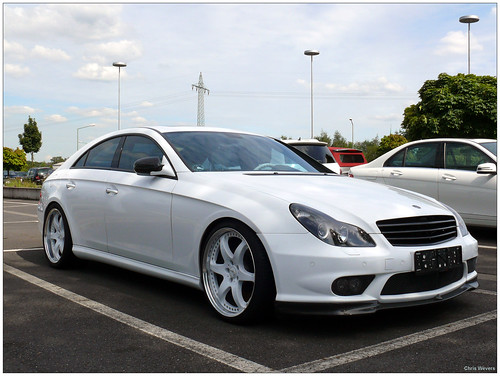
The Mercedes-Benz CLS is an executive-size sedan originally launched in 2004 and based on the W211 E-Class platform and was internally designated as the C219. The second generation CLS-Class was introduced in September 2010 and production started in the beginning of 2011.


Brabus Rocket 800 (2012)


The CLS marked Mercedes-Benz's return to the executive-size coupe market since the (W124) E-Class Coupe (a two-door sedan) went out of production in 1995. The (W210) E-Class did not spawn a coupe variant, as Mercedes-Benz choose instead to introduce a smaller coupe based on the compact C-Class, the CLK-Class. However, the CLK-Class was built with a lengthened C-Class wheelbase so it could be slotted as a mid-sized vehicle, and it also featured styling cues, engines, and similar pricing to the (W210) E-Class to give the impression that the (W124) E-Class Coupe had been directly replaced.


2012 Brabus Rocket 800


Marketed as a four door coupe, the CLS recalls the fastback saloon designs of Robert Opron (born 1932) in the 1970s but is actually the work of the influential American automotive designer, Michael Fink (born 1967), who styled the first CLK, the C-Sportcoupe, and is known as the stylist who penned the Maybach 57 and 62. According to a Mercedes-Benz press release, the CLS-class was produced to combine the "strong, emotive charisma" of a coupe with the "comfort and practicality" of a saloon. Save for its four-door design, the CLS's design tends towards a coupe, as its sleek roofline reduces the rear passenger room to a 2+2 arrangement, and it offers a smaller selection of engines tending towards high powered of the range, compared to contemporary sedans such as the E-Class.


Brabus Rocket 800 Brabus


2012 Brabus Rocket 800 Rear


Brabus Rocket 800 - Side,


Picture 2012 Brabus Rocket 800


pagani huayra

##title##
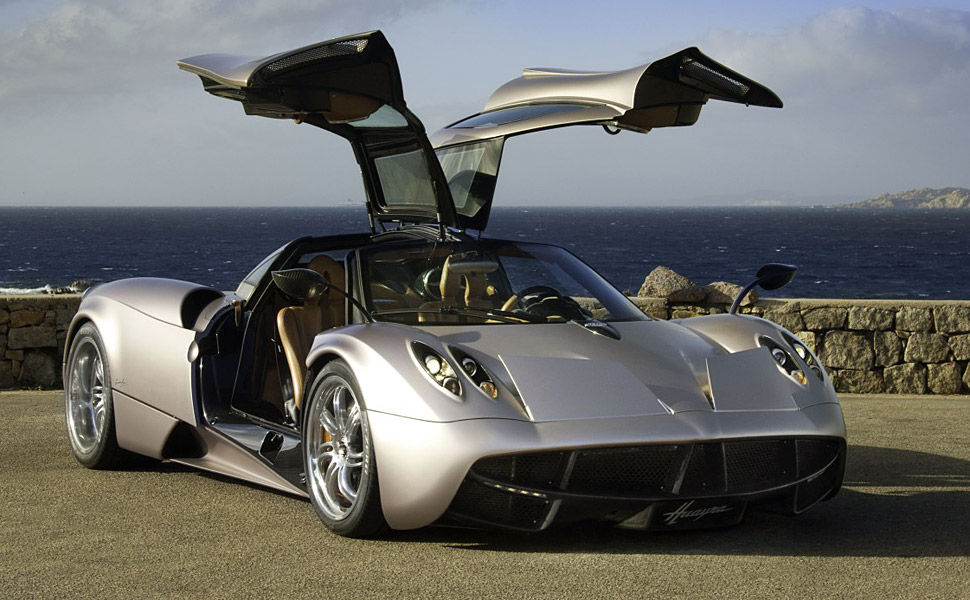
Like the Zonda, the Huayra uses a Mercedes-AMG 60° V-12 engine, now fitted with dual turbochargers. This engine, the M158, produces over 700 horsepower and 1,000 N·m (740 lb·ft) of torque. Its top speed is 230 mph (370 km/h) and it has a 0–100 km/h (0-62 mph) time of less than 3.5 seconds. Using Pirelli tires, the Pagani Huayra is capable of withstanding 1.5g of lateral acceleration at speeds of up to 230 mph (370 km/h).


pagani-Huayra-frontal28991.jpg


Unlike many modern supercars, the Pagani Huayra does not use a dual-clutch gearbox; instead it uses a seven-speed sequential gearbox and a dual-disc clutch. The choice not to use a dual-clutch in oil bath was because it would lead to an increase in weight of over 70 kg (154 lb), negating the advantage of the ability of such transmissions to change gears faster. As a result, the entire transmission of the Pagani Huayra weighs 96 kg (210 lb).


Pagani Huayra


Mercedes-Benz's AMG division provides the engine of the Huayra. The 5,980 cc, twin-turbo, 60° V12 is shared with the Mercedes-Benz SL65 AMG Black Series, but has been modified at the request of Pagani to reduce turbo lag and improve response, which resulted in smaller turbos, new intercoolers and re-programmed ECU settings.


Pagani Huayra


Pagani-Huayra-FQ-m6XY3web.jpg


Pagani Huayra $1 Million


Pagani Huayra


diatto car

##title##
- 1838-The first patent. - Guglielmo DIATTO, 33 years old, an inventive and enterprising craftsman, patents a 'perfected wheel', the first in a series of technological innovations that would make the fortunes of three generations of industrialists (the patent is held at the National Museum dell'Automobile in Turin, which displays a DIATTO car).


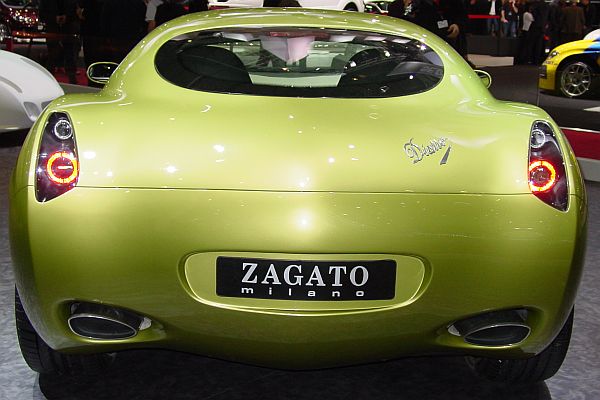
Zagato Diatto Car Wallpaper


- 1864-Railway carriage construction for Europe. - The founder's sons Giovanni and Battista Diatto, construct railway carriages for the luxury Compagnie des Wagons Lits et des Grands Express Europeens, TEE Trans Europe-Orient Express of Paris, the most luxury train in the world at the time.


zagato resolution widescreen albums wallpapers diatto car wallpaper high


- AT THE START OF 1900. - 1905-Diatto veichles. - The engineers Vittorio and Pietro DIATTO, grandsons of the founder Guglielmo (the third generation of the dynasty of distinguished industrialists), decide to manufacture sports cars to sell to their vast international wealthy carriage customers. In Turin, on April 12, 1905, they found the "Società Diatto-A. Clement" in partnership with the French company A. Clément Bayard, from Levallois Perret, Paris. - The company has a workforce of 500 (by way of comparison Fiat has a workforce of 776) and produces cars, initially with engines with 4 and 6 cylinders and, after the first world war, also 8 cylinders with compressor, aluminium pistons with 4 valves, up to 6,000 cc.


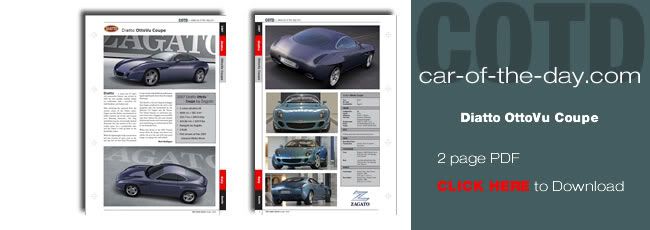
Car of the Day - Diatto OttoVu


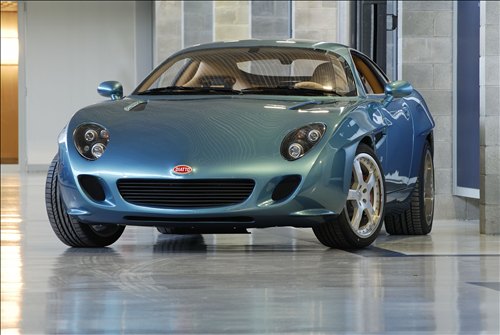
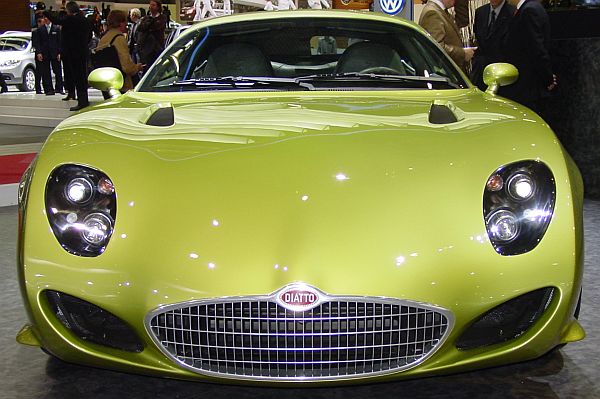
Diatto front


Only two cars were built,


Diatto was an Italian car


shelby cobra

##title##
Like many British specialist manufacturers, AC Cars had been using the smooth, refined Bristol straight-6 engine in its small-volume production, including its AC Ace 2-seater roadster. This had a hand-built body with a steel tube frame, and aluminium body panels that were made using English wheeling machines. The engine was a pre-World War II design of BMW which by the 1960s was considered dated. Bristol decided in 1961 to cease production of its engine and instead to use Chrysler 331 cid (5.4 L) V8 engines. Although untrue, it is commonly believed that AC was left without a future source of power and that American ex-racing driver Carroll Shelby saved the company from bankruptcy. AC started using the 2.6 litre Ford Zephyr engine in its cars. In September 1961, Shelby airmailed AC a letter asking them if they would build him a car modified to accept a V8 engine. AC agreed, provided a suitable engine could be found. He first went to Chevrolet to see if they would provide him with engines, but not wanting to add competition to the Corvette they said no. Ford however, wanted a car that could compete with the Corvette and they happened to have a brand new thin-wall small-block engine which could be used in this endeavor. It was Ford's 260 in³ HiPo (4.2 L) engine – a new lightweight, thin-wall cast small-block V8 tuned for high performance. Ford provided Shelby with two 260ci engines. In January 1962 mechanics at AC Cars in Thames Ditton, Surrey fitted the prototype chassis CSX0001 with a 260ci Ford V8; the 221ci was never sent. However, early engineering drawings were titled "AC Ace 3.6". After testing and modification, the engine and transmission were removed and the chassis was air-freighted to Shelby in Los Angeles on 2 February 1962. His team fitted it with an engine and transmission in less than eight hours at Dean Moon's shop in Santa Fe Springs, California, and began road-testing.


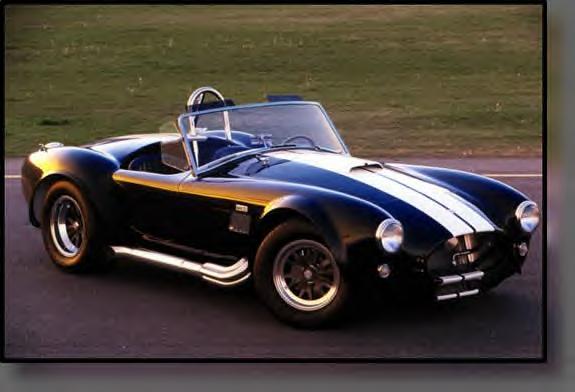
the 1966 Shelby Cobra 427


AC's system was as follows: The Ace chassis numbers read AEX... "A" being the car series and "X" being for export with left hand drive. Later with the introduction of the Bristol engine the chassis numbers ran "BEX..." When switching to the Ford 2.6 engine the Ace chassis numbers ran "RS..." for Ruddspeed as Ken Rudd may have been influential in the choice of engine. The first Cobra chassis was left hand drive and given the next letter in the alphabet,i.e. C. Therefore the numbers ran CSX2... for all the export Cobras. Otherwise, the prefix was "CS2...". The four following numbers ran from 2000 sequentially. When the MKIII Cobra was built the identification ran from CSX3000 (for left hand drive export). There were other numbers used such as "COB...." and "COX...".


1966 Ford 427 Shelby Cobra


Production proved to be easy, since AC had already made most of the modifications needed for the small-block V8 when they installed the 2.6 litre Ford Zephyr engine, including the extensive rework of the AC Ace's front end. The most important modification was the fitting of a stronger rear differential to handle the increased engine power. A Salisbury 4HU unit with inboard disk brakes to reduce unsprung weight was chosen instead of the old ENV unit. It was the same unit used on the Jaguar E-Type. On the production version, the inboard brakes were moved outboard to reduce cost. The only modification of the front end of the first Cobra from that of the AC Ace 2.6 was the steering box, which had to be moved outward to clear the wider V8 motor.


427 Cobra Country--Ford AC


Shelby Cobra. by admin


Shelby Cobra


1967 Shelby Cobra picture,